5 Questions to Ask When a Prospect Says "Send Me a Proposal"
"Send me a proposal" is where deals die. Ask these 5 critical questions before sending anything to ensure proposals get read and move deals forward.
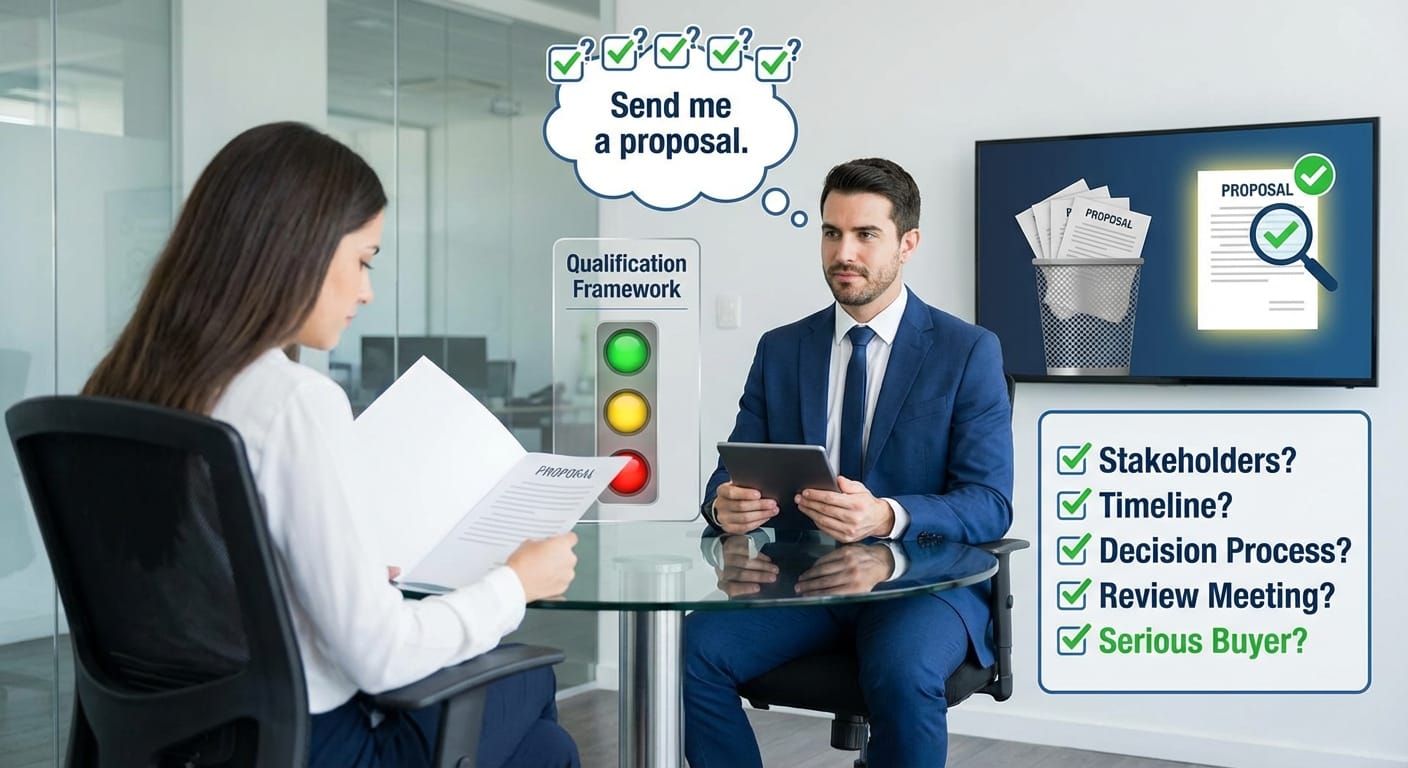
"Send me a proposal" sounds like progress - but it's usually where deals die. Here are 5 questions to ask before sending anything, ensuring your proposal gets read and actually moves deals forward.
"Send me a proposal" feels like winning. They're interested enough to ask for next steps, right?
Wrong.
Most proposals sent after this request die unread in inboxes. Prospects use "send a proposal" to end sales conversations politely without committing to anything.
The solution isn't refusing to send proposals - it's asking 5 critical questions BEFORE you send one.
Why "Send Me a Proposal" Kills Deals
It's a Polite Brush-Off: Prospects say "send a proposal" when they want to end the conversation without saying "not interested."
You Lose Control: Once you send a proposal, you're waiting for them to respond. They control timing and next steps.
Critical Information Is Missing: You don't know decision criteria, stakeholders, budget, or timeline. Your proposal is a guess.
No Champion: If they won't discuss details before proposal, they won't champion it internally after you send it.
Result: You spend hours crafting proposals that get ignored or used to validate decisions they've already made.
The 5 Questions to Ask
Question 1: "What specifically would you like to see in the proposal?"
What This Reveals:
- Whether they've thought through what they actually need
- If they're serious or just brushing you off
- What matters most to them
Red Flag Responses:
- "Just send me whatever you normally send"
- "Your standard proposal is fine"
- Vague or generic requests
Good Responses:
- Specific requests about pricing, timeline, scope
- Questions about how you'd address their situation
- Concern about particular aspects
If They're Vague: "I want to make sure I send something relevant rather than generic. Help me understand - what specific questions do you need answered to make a decision?"
Question 2: "Who else needs to review this proposal?"
What This Reveals:
- If you're talking to decision-maker or influencer
- How many stakeholders are involved
- Decision-making process
Red Flag Responses:
- "Just me"
- "I'll handle that internally"
- Won't reveal other stakeholders
Good Responses:
- Names specific people and their roles
- Explains what each person cares about
- Describes review/approval process
If They Won't Share: "I ask because different stakeholders usually have different priorities - finance cares about ROI, operations about implementation, IT about security. Who should I make sure this addresses?"
Question 3: "What's your timeline for making a decision?"
What This Reveals:
- Whether there's real urgency or this is exploration
- If timeline is realistic or they're delaying
- What's driving timing
Red Flag Responses:
- "No specific timeline"
- "Whenever we get around to it"
- "We're just exploring options"
Good Responses:
- Specific date or timeframe
- Reason for timeline (budget cycle, deadline, problem urgency)
- Consequences of missing timeline
If Timeline Is Vague: "I ask because if there's no timeline, proposals tend to get deprioritized. What would make this urgent enough to decide by [specific date]?"
Question 4: "What's your decision-making process after you receive the proposal?"
What This Reveals:
- Steps between proposal and decision
- How long process takes
- Where deals typically stall
Red Flag Responses:
- "I'll review and get back to you"
- "We'll discuss internally"
- Can't describe specific process
Good Responses:
- Clear steps (review → stakeholder meeting → legal → approval)
- Timeline for each step
- Criteria for moving forward
If Process Is Unclear: "Help me understand what happens after I send this. Do you review alone first, then bring to others? Is there a formal approval process? I want to set expectations for next steps."
Question 5: "Rather than sending a proposal blind, would it make sense to schedule a call to walk through it together?"
What This Reveals:
- If they're willing to invest time (signal of seriousness)
- Whether they just want to get you off the phone
- If there's real interest or polite brush-off
Red Flag Responses:
- "Just send it, I'll review"
- Won't commit to any follow-up
- Resistant to any additional conversation
Good Responses:
- Agrees to proposal review call
- Suggests specific time
- Wants to involve other stakeholders
Why This Question Matters: Serious buyers want to understand proposals thoroughly. Brush-offs just want you to go away.
Alternative Framing: "I've found proposals are most effective when we can discuss them together. That way I can address questions real-time rather than you wondering what I meant. Would [specific day/time] work for a 30-minute walkthrough?"
What to Do Based on Their Answers
Green Light (Send Proposal):
✅ They answer all 5 questions with specifics ✅ Multiple stakeholders identified ✅ Clear timeline and decision process ✅ Agree to proposal review meeting ✅ Engaged and asking good questions
Action: Send tailored proposal + schedule review call
Yellow Light (Qualify Further):
⚠️ Some vague answers but some specifics ⚠️ Timeline exists but process unclear ⚠️ Some stakeholders identified ⚠️ Hesitant about review call but not dismissive
Action: One more qualification conversation before proposal. "Before I invest time in detailed proposal, let's make sure I understand [specific gaps]. Would 15 minutes this week work?"
Red Light (Don't Send - Qualify Out):
🚫 All vague answers 🚫 "Just send whatever" 🚫 No timeline or decision process 🚫 Won't reveal stakeholders 🚫 Resistant to any further conversation
Action: "Based on our conversation, I'm not confident a proposal would be valuable right now. Here's why: [specific reasons]. Would it make more sense to reconnect when [timing is clearer/stakeholders are identified/you have budget allocated]?"
The Proposal Control Framework
Don't: ❌ Send proposals immediately when asked ❌ Accept "just send your standard proposal" ❌ Lose control of next steps ❌ Spend hours on proposals that won't be read
Do: ✅ Ask these 5 questions first ✅ Qualify whether proposal is worth sending ✅ Schedule proposal review meeting before sending ✅ Maintain control of process
Quick Reference Checklist
Before Sending ANY Proposal:
- Asked what specifically they want to see
- Identified all stakeholders who'll review it
- Confirmed timeline and urgency
- Understand decision process after proposal
- Scheduled proposal review meeting
- Confident they're serious, not brushing you off
If You Can't Check All Boxes: Don't send the proposal yet. Qualify further or qualify out.
Conclusion
"Send me a proposal" isn't progress - it's often where deals die. Protect your time by asking these 5 questions before sending anything.
Serious buyers will answer them. Time-wasters will reveal themselves through vague responses or resistance to conversation.
Send fewer proposals to better-qualified prospects. You'll spend less time writing and more time closing.
Ready to practice handling "send me a proposal" requests? Book a demo with the Sellible team and work with AI prospects who test your qualification skills.